

Song of Achilles, the beloved “retelling” of Greek mythology or more specifically Homer’s Iliad, and the seemingly modern take on the relationship between Achilles and Patroclus is not what it seems. If you’re one of those who are yet to travel through its pages, let this piece serve as a warning (?). Okay, so, where shall we begin? Do I begin talking about how the original myths are more modern than anything that Miller writes here or do we look at the heteronormative themes present everywhere, or do we talk about the gorgeous irrationality that drips through these pages?
Let me make something clear right away. This is not an attack on Miller as a writer (or maybe it is?). I quite enjoyed reading Circe (the author has since changed their mind; Circe, too, was an abomination), a book that stays true to the original myths while adding a new perspective of its own, something I believe is the very purpose of a retelling. However, when it comes to Song of Achilles, tsk tsk tsk.
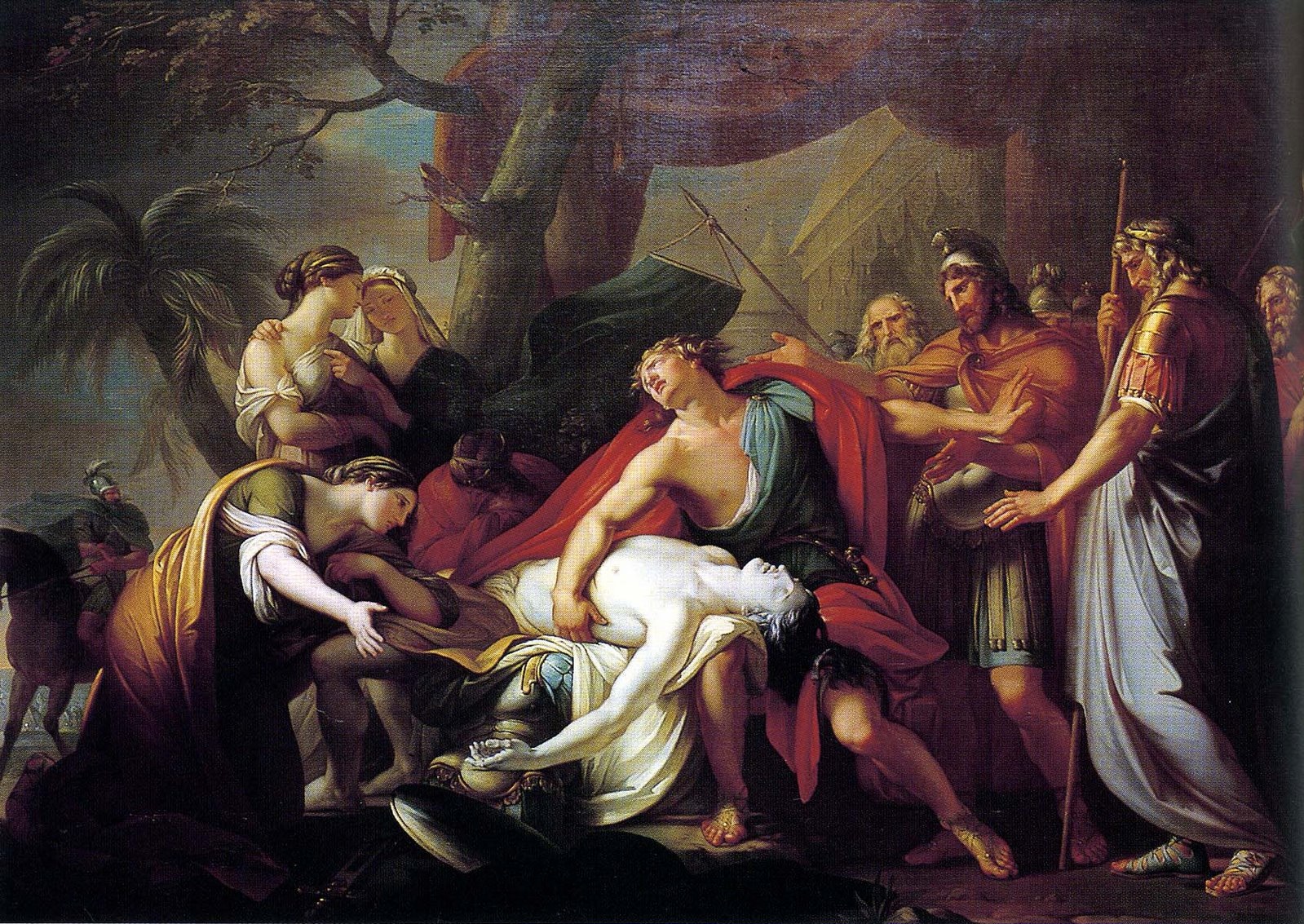
The Death of Patroclus
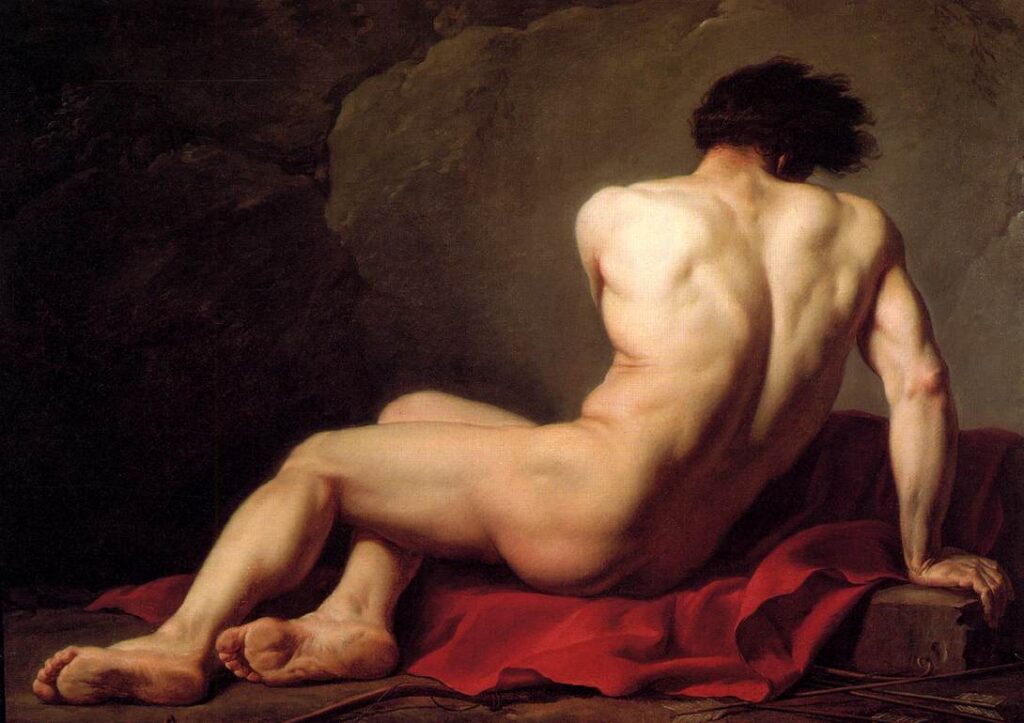
The Patroclus in Miller’s story is a direct contrast to the warrior in the pages of the Greek myths. This is Patroclus we’re talking about. The same Patroclus who had a higher death count than most of his counterparts. The same Patroclus who goes through the Trojan army like nothing. The same Patroclus who has to be stopped by a god (freaking Apollo himself!) because he decided to scale the walls of Troy by himself.
Come Miller’s Patroclus and he’s almost like a loyal follower of Achilles. He’ll follow him wherever he goes, and battlefields are a strict no-no. By changing this very basic fact about Patroclus, Miller changes everything about him. Retellings are supposed to change some elements, but here it’s almost as if she kills Patroclus and blabbers about some dead zombie (serving a socio-political agenda).
But Amritesh, I hear you ask, isn’t she changing the idea of what a hero can be? That a hero can be someone existing outside the stereotypes of masculinity?
Dear oh dear, you’ve got no clue, do you?
The Death of Rationality
I did not kill anyone, or even attempt to. At the end of the morning, hours and hours of nauseating chaos, my eyes were sun blind, and my hand ached with gripping my spear—though I had used it more often to lean on than threaten. My helmet was a boulder crushing my ears slowly into my skull.
It felt like I had run for miles, though when I looked down I saw that my feet had beaten the same circle over and over again, flattening the same dry grass as if preparing a dancing field. Constant terror had siphoned and drained me, even though somehow I always seemed to be in a lull, a strange pocket of emptiness into which no men came, and I was never threatened.
song of achilles, chapter twenty-two
This scene is set right in the middle of a battle. A live, actual battle. Even if we close our eyes and manage to ignore the way she reduces Patroclus to this pittance and how it’s disingenuous to the character yada yada, there remains another issue. It just does not make sense. At all. A soldier standing and dancing around on a battlefield? What is this, the Marvel Cinematic Universe?
And for the sake of justifying her “version” of Patroclus, Miller would cross seas and fight dolphins if she has to. She’ll change Iliad, she’ll change how these epic stories unfold, she’ll change what the characters represent and symbolize, she’ll murder nuance, and she’ll do other unspeakable literary atrocities too scandalous to deserve a mention here.
If I had to read stupidity, the masterpiece that is Fifty Shades of Grey is always out there. Why bother reading a Greek retelling?
But wait, there’s more. The climactic scene sees Patroclus crusading through the Trojan army by fluke. No, I didn’t make a mistake there. A guy who can’t fight, who’s always avoided battlefields breaks through the mighty Trojan army by fluke. It just happens. Somehow. Magically. Make it make sense to me, someone?
Heteronormativity: A Common Occurrence in Popular Gay Fiction
.jpg)
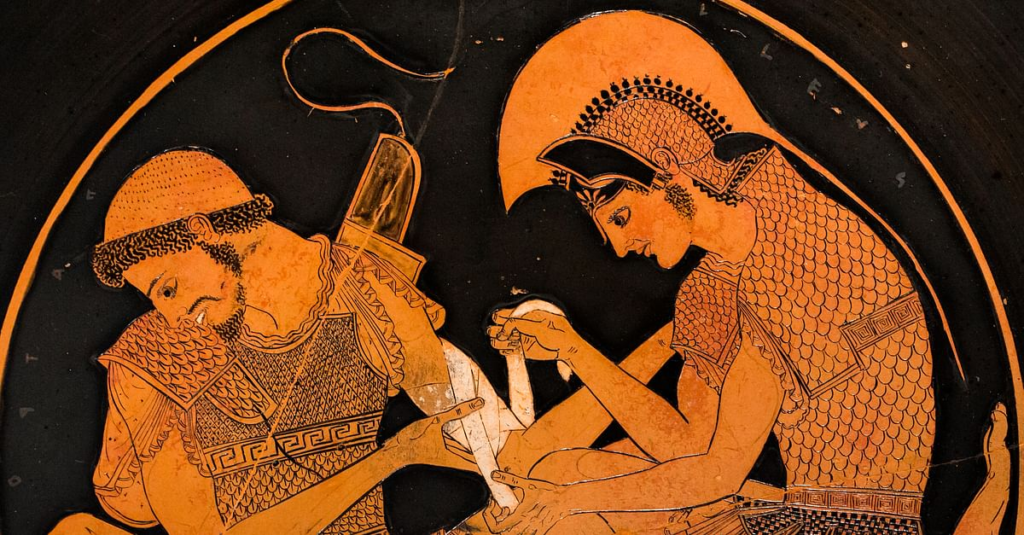
Heteronormativity in a relationship can be broadly referred to as partners exhibiting different behavior. It’s the popular seme-uke dynamic all over again, wherein a partner is dominant and the leader (seme) and the other is submissive and simply follows the other (uke). This aligns with the commonly asked (and homophobic) question: What are you, a top or a bottom?
Why is this problematic? It’s an attempt at converting homosexual and queer relationships into quasi-heterosexual ones. As if everything makes sense only when they exist in binaries, in extremities, in blacks and whites. Which is, I’m very sorry to say, not how the world functions. And certainly not queer relationships.
This doesn’t just end with this book, unfortunately. Almost like an extension of the popular straight man’s fantasy of watching two lesbians kiss and fuck, there’s a rise in “gay romance novels” by straight women in the market. As if the best friend trope wasn’t humiliating enough, now the authors want to use them to enact their personal fantasies on the page. Never for a second think that these books were written for queer audiences, for the target audience remains, by and large, straight women. This isn’t representation, this isn’t making things better, but only preserving the pre-existing dynamics. Miller’s book further adds to that.
Coming back to our book, the beauty of the relationship between Achilles and Patroclus in The Iliad is that they have an equal dynamic. Consider Achilles on one hand. The greatest warrior, a demigod, a hero, second to none. The Aristos Achaion. On the other hand is Patroclus, born to mere mortals, yet no less than Achilles on the battlefield. The man who single-handedly inspired the defeated and demoralized Achean army to battle again.
To take this equal dynamic and reduce it to whatever it is that exists in the Song of Achilles in order to make everything more palatable to audiences (or perhaps Miller herself?) is as regressive as they go. She goes so far in her process of creating this quasi-heterosexual relationship that Achilles barely shows any reaction to Patroclus’ death here. When in The Iliad, he cried with such intensity and for such a length that his mother had to come scampering to find out what was going on.
At this point, you might ask, but hey, doesn’t she make their close friendship a homoerotic one? Isn’t that a somewhat modern take on their story? Ummmmm…
Queerphobia, Regressivity, and Whitewashing
Someone not very familiar with Greek mythology might think that homosexuality wasn’t prevalent or observed in public spheres in those times. Barely so. While it wasn’t outright celebrated, the sexual and romantic dynamics used to be more ambiguous and complex than a lot of purveyors would have you believe.
And here’s where queerphobia creeps into Miller’s story. Instead of both Achilles and Patroclus having relationships with other women while also having a relationship with each other, effectively insinuating that they’re not “pure gays”, she creates this relationship that fits the Victorian idea of how a relationship ought to be. Taking something complex and nuanced and layered and turning it into something narrow and linear?
Part of what makes the story of Achilles and Patroclus so fascinating to historians and literary enthusiasts over the years is how it subverts expectations and categorization. This was a relationship that completely flipped the idea of how a homosexual relationship ought to be.
Someone remind me why this one’s considered to be a modern retelling, again?
The matter of her trying to fit our dear protagonists into her Victorian moralities is present in repeated incidences. Achilles doesn’t sleep with women, of course, because he’s such a noble at heart and because you can only love one person at one time. He might be arrogant and can dream of glory in all its vanity, but sexual infidelity? That’s where the lines must be drawn, sire. To fit these characters into this worldview, she alters the characters and the relationships of/with Briseis and Deidameia as well. To dump away these wonderful, complex characters away in order to enforce these traditional and regressive tropes over and over again: whitewashing in all its glory!
Look, part of what makes Achilles so compelling a character are his flaws. He’s a deeply flawed character in The Iliad, someone who decided to skip a war because a woman he “won” was taken away from him, someone whose anger knows no bounds. Not his charisma, not his bravery, not his strength, as this book will have you believe.
The Greek world of The Iliad is a far cry from a just and equal society in a lot of things. From societal injustices ranging from social and economic equality to the prevalence of patriarchy, there’s much that can be played with there. But the perspective that Miller tries to change here, it’s already more advanced and nuanced than her book can ever strive to be.
Thetis
You’d think all this would be enough. But no, what’s a story without some good old misogyny? If only she got satisfied after ruining the protagonists, it might be a tolerable book. But no, she makes sure she butchers everyone in the worst possible way. And when I say worst, I mean the worst possible way out there.
We’ll only look at Thetis here, for the sake of brevity. This is a woman who was raped by the person she was later forced to marry, by the gods. Oh, and the same person would keep on raping her for the rest of the next year. Let’s see what’s Miller got to say about the two of them:
An ordinary wife would have counted herself lucky to find a husband with Peleus’ mildness, his smile-lined face. But for the sea-nymph Thetis nothing could ever eclipse the stain of his dirty, mortal mediocrity.
song of achilles, chapter three
Yep.
Mind you, Thetis is one of the best characters (although a minor one) in The Iliad, a woman who was raped over and over and who left her husband at the first chance she got, yet a woman who loved her son madly and would go to any lengths to protect him (the legend of Thetis dipping Achilles in the river Styx to make him immortal is one of the most popular non-Homerian Greek stories), a woman who comes forth to aid Achilles over and over again during the Trojan war.
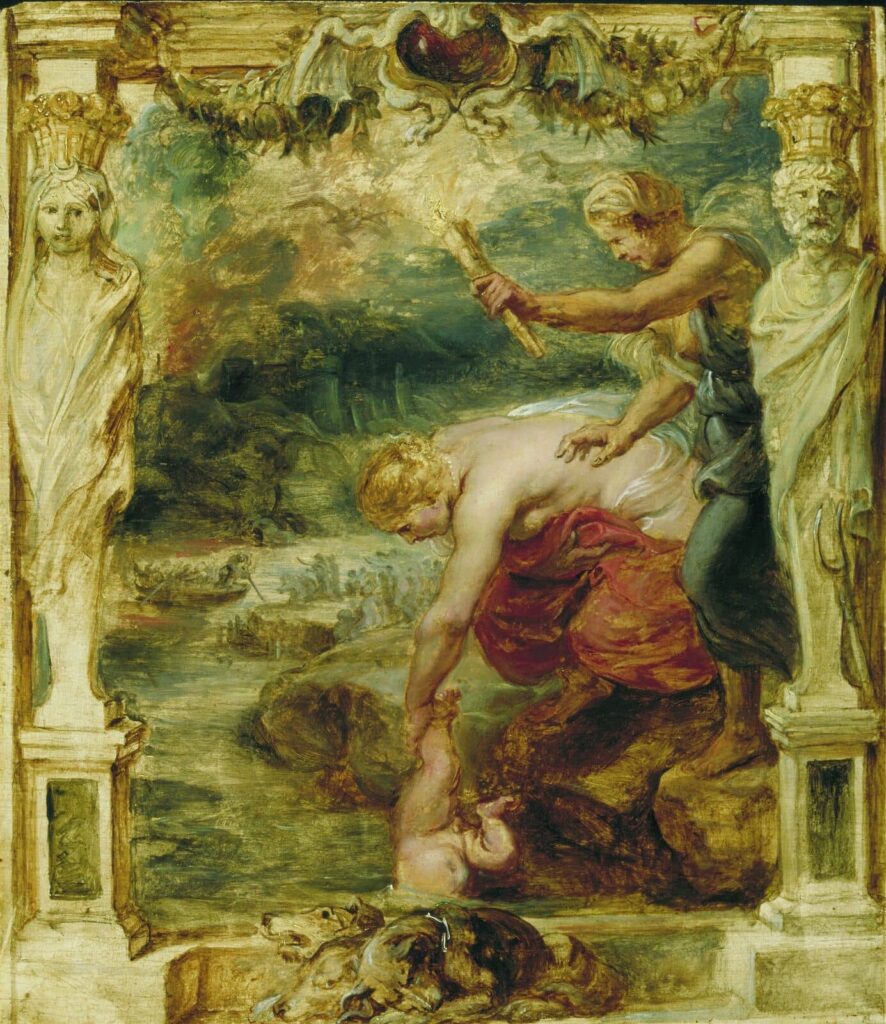
Miller transforms that woman into an evil, scheming, manipulative mother who can’t see Achilles happy. Her treatment of this character is hollow and cruel and even manages to outshine her butchering of Patroclus somehow. It’s misogynistic, and patriarchal, and makes you think if her sole intention behind this was to create the evil parent trope so common in heterosexual romances.
A Disservice to The Iliad
I pity those whose only contact with the Greek myths is this book. Not only does it sanitize and force a certain outlook on its readers, but it does injustice to, what essentially is, an artifact of history. Because, at the end of the day, when all is said and done, that’s what great literature is. A historical artifact, that gives a glimpse into a world gone by, like nothing else.
It’s a book that ditches all character growth and complexity for the sake of yet another heteronormative romance novel. It forsakes all the intricacy and beauty of the original myths, creating a regressive and bland story in the process. There are no two ways about the fact that the Song of Achilles is an absolute disservice to The Iliad.
To conclude…
It’s a book that rehashes and changes every single thing good about The Iliad and if that wasn’t enough, those very “changes” are hailed as “modern” to top it all off. If this is modernity, someone please throw me to the dark ages please.